CD-R looking for a reader – the National Library of Norway marks World Digital Preservation Day


On 5. November, World Digital Preservation Day (WDPD) is celebrated around the world. This year’s theme is “Save Our Stories (SOS): Our Digital Heritage in Danger” – a reminder that digital material does not necessarily last forever.
The National Library of Norway holds several hundred thousand digital offline media carriers, representing around a hundred different formats. These range from floppy disks, CDs and DVDs to hard drives, USB drives and various types of magnetic tape. What they have in common is that their content cannot be accessed unless we have functioning media carriers, the right equipment, and the knowledge needed to read the data.
Many of these media are becoming increasingly vulnerable. The physical media degrade over time and may eventually become unplayable. The necessary reading equipment can become difficult to obtain, and knowledge of older technologies can disappear. This is why the Digital Preservation Team has chosen to use this year’s WDPD to draw attention to the digital offline media in our collections.
Around the National Library, staff are therefore encountering some rather unusual personal ads:
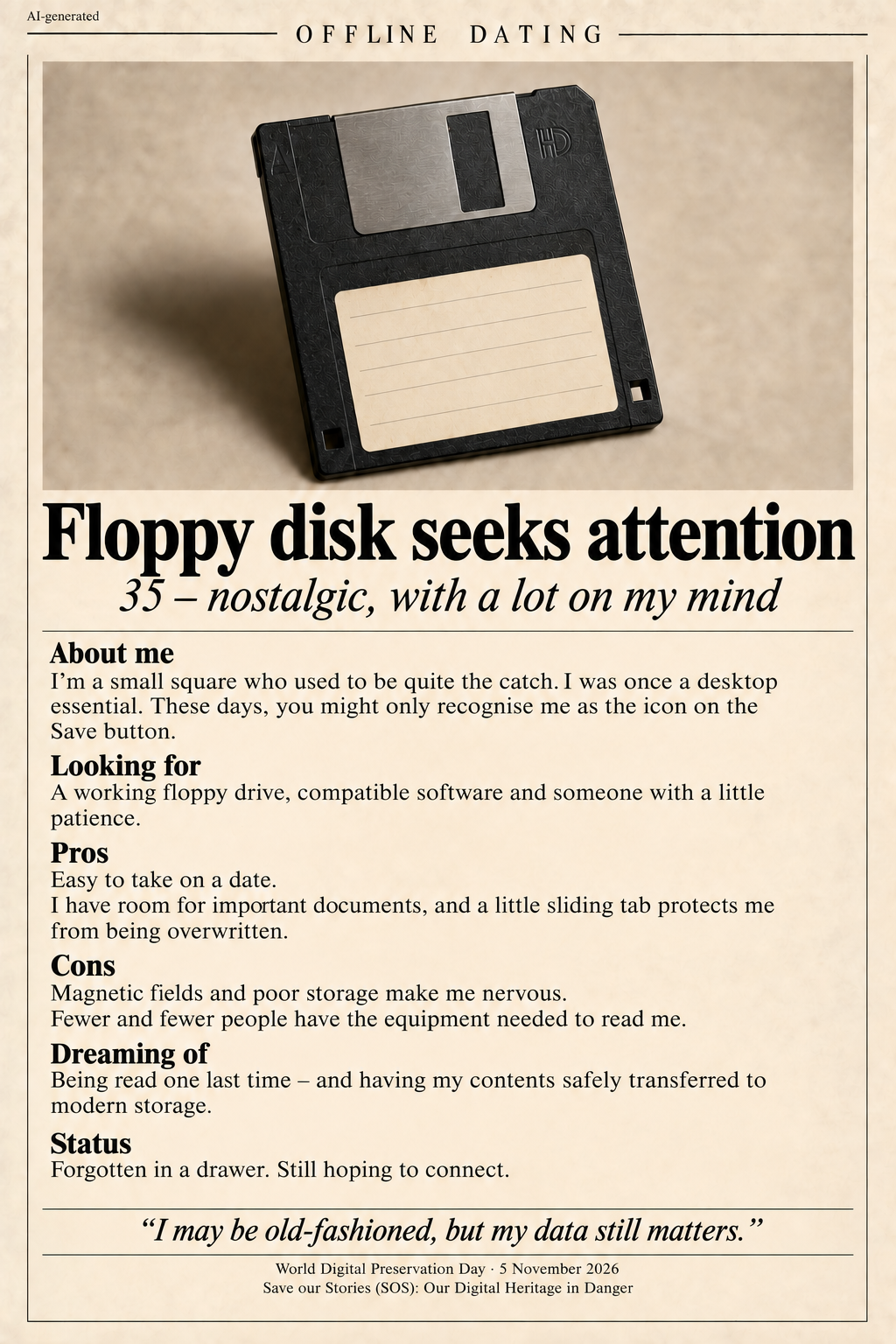
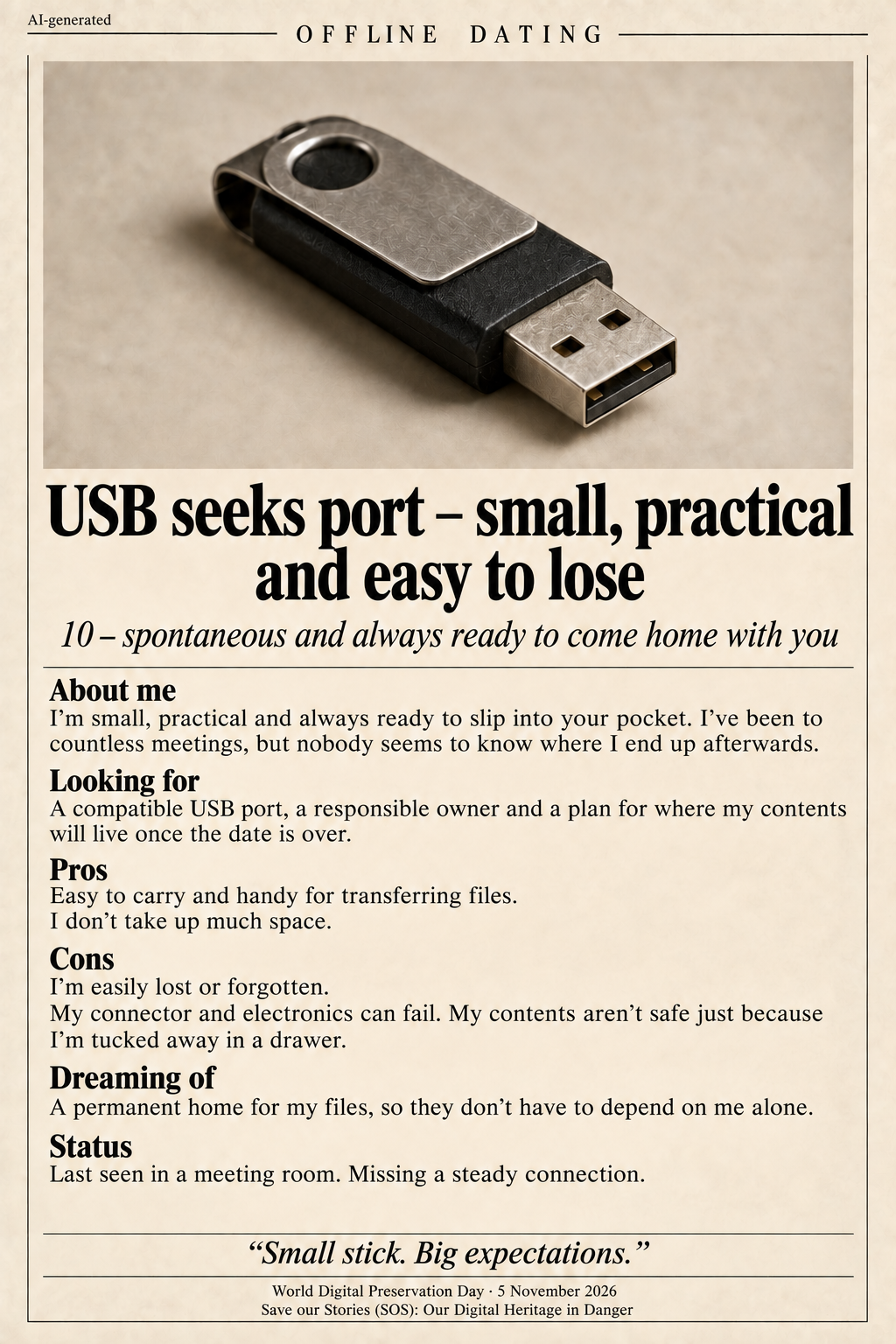
Behind the humour is a serious issue. On our intranet, we have published an overview of different types of offline media held by the National Library, together with a broad assessment of how vulnerable they are. The assessment draws on the Digital Preservation Coalition’s Global Bit List of Endangered Digital Materials, which highlights digital materials at risk of loss.
On World Digital Preservation Day itself, the Digital Preservation Team is also inviting colleagues to an open day. They will have an opportunity to take a closer look at different storage media, encounter some technologies that were once part of everyday life, and discuss the challenges involved in preserving their content. And since digital preservation is not only about bits and bytes, there will also be a snack.
The aim of the campaign is simple: to make us more aware of what we actually have, how vulnerable some of this material is – and that we need to act while we still have the ability to read it.